
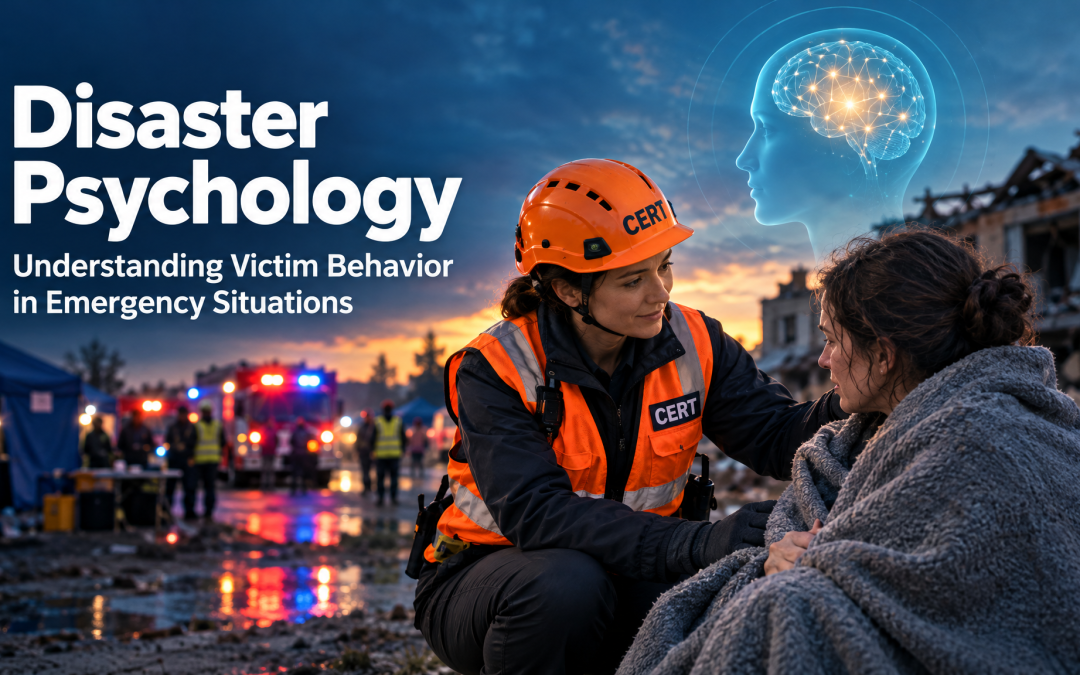
Disaster Psychology: Understanding Victim Behavior in Emergency Situations
When disaster strikes, human behavior can seem unpredictable, even irrational. Yet beneath the surface chaos lies a complex web of psychological responses that have evolved over thousands of years. Understanding disaster psychology isn’t just academic curiosity—it’s a crucial tool for emergency responders, community leaders, and anyone who wants to better prepare themselves and their loved ones for crisis situations.
The human mind under extreme stress operates differently than in normal circumstances. What might appear as panic or poor decision-making often follows predictable patterns rooted in our evolutionary survival mechanisms. By examining these psychological responses, we can better comprehend why people react the way they do during emergencies and, more importantly, how to respond more effectively when disaster strikes.
The Science Behind Emergency Response Psychology
Our brains are wired for survival, but not necessarily for the complex disasters of modern life. When faced with immediate danger, the amygdala—our brain’s alarm system—triggers the famous “fight, flight, or freeze” response. This ancient mechanism served our ancestors well when facing predators, but it can sometimes work against us in contemporary emergency situations.
During a crisis, stress hormones like cortisol and adrenaline flood our system, sharpening some cognitive functions while impairing others. Memory formation becomes selective, focusing on threat-related information while filtering out seemingly irrelevant details. This explains why disaster survivors often have vivid memories of specific moments but struggle to recall the sequence of events or seemingly obvious escape routes they might have overlooked.
The prefrontal cortex, responsible for complex reasoning and decision-making, can become compromised under extreme stress. This neurological reality helps explain why intelligent, capable people sometimes make choices during emergencies that seem baffling in hindsight. It’s not a character flaw—it’s human biology responding to extraordinary circumstances.
Common Psychological Reactions During Disasters
Understanding typical psychological responses during disasters can help us recognize these patterns in ourselves and others, leading to more compassionate and effective emergency response strategies.
Denial and Disbelief
One of the most common initial reactions to disaster is denial. People often refuse to believe that a serious threat exists, even when presented with clear warning signs. This isn’t stupidity or stubbornness—it’s a protective psychological mechanism called normalcy bias.
Normalcy bias causes people to underestimate threats and assume that things will continue functioning as they always have. During Hurricane Katrina, many residents stayed in their homes despite evacuation orders, not because they wanted to die, but because their minds couldn’t fully process the magnitude of the approaching danger. This same phenomenon occurs in building fires, where people continue their normal activities despite fire alarms, assuming it’s just another false alarm.
Hypervigilance and Anxiety
On the opposite end of the spectrum, some individuals become hypervigilant during emergencies, scanning constantly for threats and interpreting neutral stimuli as dangerous. While this heightened awareness can sometimes be protective, it can also lead to exhaustion and poor decision-making as the person becomes overwhelmed by perceived threats.
This hypervigilant state often manifests as difficulty sleeping, startled responses to normal sounds, and an inability to relax even in relatively safe environments. Emergency responders frequently experience this reaction, as their training makes them acutely aware of potential dangers that others might miss.
Social Attachment and Helping Behavior
Contrary to popular media portrayals of disaster-induced chaos and selfishness, research consistently shows that people typically become more prosocial during emergencies. The “disaster utopia” phenomenon describes how communities often come together in remarkable ways following catastrophic events.
During the 9/11 attacks, strangers helped each other evacuate buildings and provided comfort to those in distress. After Hurricane Harvey, countless volunteers used their own boats to rescue stranded neighbors. This altruistic behavior isn’t just feel-good storytelling—it’s a documented psychological response that emerges when people recognize shared vulnerability and common humanity.
Factors Influencing Individual Responses
Not everyone responds to disasters in the same way. Several factors influence how individuals react during emergency situations, and understanding these variables can help predict and prepare for different response patterns.
Previous Trauma and Experience
People who have survived previous disasters often respond differently than those experiencing their first emergency. Sometimes prior experience provides valuable coping skills and realistic expectations about what to expect. However, previous trauma can also create heightened sensitivity to new threats, leading to more intense fear responses or, conversely, emotional numbing.
Military veterans, first responders, and others with emergency training may maintain better cognitive function under stress due to repeated exposure and practice. However, they’re not immune to psychological impacts—they may simply express distress differently or delay emotional processing until after the immediate danger has passed.
Cultural and Social Background
Cultural background significantly influences disaster response. Some cultures emphasize collective action and community responsibility, while others prioritize individual survival and family protection. Religious beliefs can provide comfort and meaning-making frameworks that help people cope with trauma and loss.
Socioeconomic factors also play a crucial role. People with greater resources—financial, social, and educational—often have more options during emergencies and may experience less severe psychological impacts as a result. However, wealth doesn’t guarantee better psychological outcomes, and some research suggests that people from lower socioeconomic backgrounds may demonstrate greater resilience due to previous experience managing adversity.
Age and Developmental Stage
Children, adults, and elderly individuals process disasters differently based on their developmental stage and life experience. Children may not fully understand the gravity of situations but can be deeply affected by the emotional states of adults around them. They often express trauma through behavioral changes rather than verbal communication.
Elderly individuals may have wisdom from previous life experiences but might also face physical limitations that increase their vulnerability during disasters. They may be more resistant to evacuation orders due to attachment to their homes and possessions, or concerns about losing independence.
Leadership and Group Dynamics in Crisis
During disasters, informal leadership often emerges naturally, but it doesn’t always come from expected sources. Research shows that effective disaster leaders typically possess specific psychological characteristics: they remain calm under pressure, communicate clearly, and demonstrate genuine concern for others’ welfare.
Group dynamics can either enhance or hinder effective emergency response. Positive group cohesion can provide emotional support and coordinate effective action. However, groupthink can also lead to poor decisions when dissenting voices are suppressed or when the group becomes overconfident in flawed plans.
The presence of children or elderly individuals often motivates groups to take more cautious approaches and can actually improve decision-making by forcing people to think beyond their immediate self-interest. Conversely, groups composed entirely of young adults might take unnecessary risks or fail to consider long-term consequences.
Long-term Psychological Impact and Recovery
The psychological effects of disasters extend far beyond the immediate emergency period. Understanding the recovery process helps both survivors and their support networks navigate the challenging weeks, months, and sometimes years following a traumatic event.
Most people demonstrate remarkable resilience following disasters, gradually returning to normal functioning without professional intervention. However, a significant minority develop longer-term psychological issues, including post-traumatic stress disorder (PTSD), depression, and anxiety disorders.
The recovery process isn’t linear—people often experience good days and bad days, and anniversary dates or similar events can trigger unexpected emotional responses years later. This is normal and doesn’t indicate weakness or failure to recover properly.
Social support plays a crucial role in recovery. People with strong social networks typically recover more quickly and completely than those who feel isolated. This underscores the importance of maintaining community connections and checking on neighbors and friends following disasters.
Practical Applications for Emergency Preparedness
Understanding disaster psychology isn’t just theoretical—it has practical applications for personal preparedness and community planning. By anticipating psychological responses, we can develop more effective strategies for surviving and recovering from emergencies.
Personal preparedness should include psychological preparation alongside physical supplies. Practice scenarios with family members, discuss potential disasters calmly during non-emergency times, and develop communication plans that account for the possibility that people might not think clearly during actual emergencies.
Community leaders and emergency responders can use psychological insights to improve their effectiveness. Clear, repeated communication helps overcome normalcy bias. Providing specific, actionable instructions works better than general warnings. Acknowledging people’s fears while providing realistic hope helps maintain cooperation and reduces panic.
Conclusion
Disaster psychology reveals that human behavior during emergencies, while sometimes appearing irrational, follows predictable patterns rooted in our evolutionary biology and social nature. By understanding these psychological responses—from initial denial to long-term recovery—we can better prepare ourselves, support others, and build more resilient communities.
The key insight is that there’s no single “correct” way to respond to disasters. People’s reactions are influenced by their background, experience, and the specific circumstances they face. Rather than judging these responses, we can use our understanding of disaster psychology to respond more compassionately and effectively when crisis strikes.
Whether you’re an emergency responder, community leader, or simply someone who wants to be better prepared for life’s uncertainties, remember that psychological preparedness is just as important as physical preparedness. By understanding how our minds work under extreme stress, we can make better decisions, help others more effectively, and ultimately save more lives when disaster strikes.
Frequently Asked Questions
Why do people sometimes freeze during emergencies instead of taking action?
The freeze response is one of three primary survival mechanisms (fight, flight, freeze) hardwired into our nervous system. When the brain perceives extreme threat, it may trigger this response as a protective mechanism, essentially “playing dead” until the danger passes. This can happen when the threat seems too overwhelming for fight or flight responses to be effective.
Is it normal to feel guilty about surviving a disaster when others didn’t?
Survivor’s guilt is extremely common and represents a normal psychological response to traumatic events. It doesn’t indicate that you did anything wrong or that you don’t deserve to have survived. Professional counseling can help process these feelings, and most survivors find that the guilt diminishes over time with proper support.
How can I help someone who seems to be in denial about an approaching disaster?
Avoid arguing or trying to force acceptance, as this often increases resistance. Instead, provide specific, factual information about the threat and concrete steps they can take to stay safe. Sometimes helping them take one small preparatory action can break through the denial and lead to more appropriate responses.
Do children recover from disasters differently than adults?
Children often show remarkable resilience, but they process trauma differently than adults. They may not verbally express their distress but instead show changes in behavior, sleep patterns, or academic performance. Maintaining routines, providing honest but age-appropriate information, and ensuring they feel safe and loved are crucial for their recovery.
How long do the psychological effects of disasters typically last?
Recovery timelines vary greatly depending on the individual, the severity of the disaster, available support systems, and other life circumstances. Most people show significant improvement within 6-12 months, but some effects may persist longer. It’s important to seek professional help if symptoms interfere with daily functioning or don’t improve over time.