
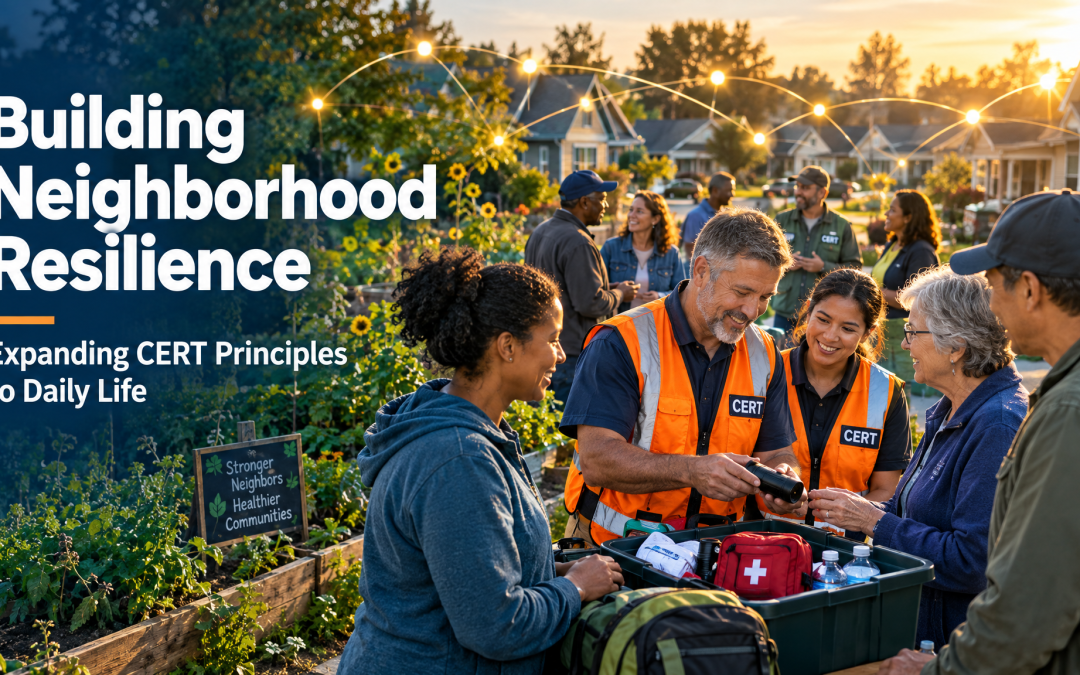
Building Neighborhood Resilience: Expanding CERT Principles to Daily Life
When disaster strikes, communities that are prepared don’t just survive—they thrive. The Community Emergency Response Team (CERT) program has taught us invaluable lessons about disaster preparedness and community resilience. But what if we could take these proven principles and weave them into the fabric of our everyday lives? Imagine neighborhoods where people know each other’s names, share resources regularly, and work together to solve problems before they become crises.
Building neighborhood resilience isn’t just about preparing for earthquakes or hurricanes. It’s about creating stronger, more connected communities that can weather any storm—whether it’s a natural disaster, economic downturn, or social challenge. By expanding CERT principles beyond emergency preparedness, we can transform our neighborhoods into thriving, supportive ecosystems where everyone benefits.
Understanding CERT Principles and Their Broader Applications
The CERT program was developed by the Federal Emergency Management Agency (FEMA) to help communities prepare for and respond to disasters. At its core, CERT teaches three fundamental principles: personal preparedness, neighborhood awareness, and coordinated response. These aren’t just emergency concepts—they’re blueprints for building stronger communities every single day.
Personal preparedness in CERT means having emergency supplies, knowing evacuation routes, and understanding basic first aid. In daily life, this translates to being self-reliant while remaining connected to your community. It means maintaining your home, managing your finances responsibly, and developing skills that benefit both you and your neighbors.
Neighborhood awareness goes beyond knowing where the fire hydrants are located. It means understanding the unique strengths, vulnerabilities, and resources within your community. Who has medical training? Which households have elderly residents who might need extra support? Where are the natural gathering places where people feel comfortable connecting?
Coordinated response in emergencies requires clear communication and defined roles. In everyday neighborhood life, this principle helps communities tackle ongoing challenges like traffic safety, youth engagement, or environmental stewardship through organized, collaborative efforts.
Creating Communication Networks That Work Every Day
One of CERT’s greatest strengths is its emphasis on communication systems that function when traditional infrastructure fails. This same principle can revolutionize how neighbors stay connected during normal times, creating stronger relationships that pay dividends when challenges arise.
Modern neighborhood communication networks might include group messaging apps, community bulletin boards, or regular coffee meetups. The key is establishing multiple channels that reach different demographics and communication preferences. Some neighbors prefer text messages, others respond better to face-to-face conversations, and many appreciate written notices they can reference later.
Consider starting a neighborhood newsletter that highlights local achievements, upcoming events, and resource sharing opportunities. This creates a regular touchpoint that keeps everyone informed while celebrating the positive aspects of community life. When emergencies do occur, these established communication channels become lifelines.
The most resilient communication networks are redundant and inclusive. They account for language barriers, technology access limitations, and varying comfort levels with different communication methods. A truly effective system ensures that everyone can both receive and contribute information in ways that work for them.
Resource Sharing and Mutual Aid Programs
CERT teaches communities to inventory their resources and skills before disasters strike. This principle becomes incredibly powerful when applied to everyday community building. Neighborhood resource sharing programs create economic benefits, reduce waste, and strengthen social bonds simultaneously.
Tool libraries have become popular in many communities, allowing neighbors to borrow equipment they might only need occasionally. This reduces individual expenses while ensuring that everyone has access to what they need for home maintenance and improvement projects. The social interactions that occur during these exchanges often lead to lasting friendships and collaborative projects.
Skill sharing networks take this concept even further. Maybe your neighbor is a retired teacher who loves helping kids with homework, while you’re handy with car repairs. Creating formal or informal systems for sharing knowledge and abilities builds community capacity while reducing everyone’s reliance on expensive professional services for routine tasks.
Community gardens exemplify resource sharing at its best. Neighbors contribute labor, tools, and knowledge while sharing the harvest. These spaces become natural gathering places where relationships form organically around shared activities and common goals.
Developing Local Leadership and Decision-Making Skills
CERT programs develop local leaders who can make decisions and coordinate responses when professional emergency services are overwhelmed. These same leadership skills are essential for addressing everyday community challenges and opportunities.
Effective neighborhood leadership isn’t about having all the answers—it’s about facilitating conversations, building consensus, and helping translate ideas into action. These leaders emerge naturally when communities create opportunities for meaningful participation in local decision-making processes.
Regular neighborhood meetings, even informal ones, provide platforms for discussing shared concerns and brainstorming solutions. Whether the issue is speeding traffic, inadequate lighting, or organizing a block party, these gatherings help residents develop collaborative problem-solving skills while addressing real community needs.
Mentoring programs can help develop leadership capacity across different age groups and backgrounds. Experienced community members can share their knowledge about navigating local government, organizing events, or managing group dynamics with newcomers who bring fresh perspectives and energy.
Building Physical and Social Infrastructure
CERT emphasizes the importance of knowing your physical environment—where utilities are located, which buildings might be vulnerable, and how people and resources move through the community. This environmental awareness becomes the foundation for improving neighborhoods proactively rather than just responding to problems.
Walkability audits help residents identify safety hazards, accessibility barriers, and opportunities for improvement. These collaborative assessments often reveal simple solutions that make neighborhoods more livable for everyone, from adding crosswalks to organizing regular cleanup efforts.
Social infrastructure is equally important. Communities need gathering spaces where people can connect naturally and regularly. This might mean advocating for better parks and community centers, but it can also involve creating informal meeting spots like front porch coffee hours or walking groups that use public spaces more intentively.
Neighborhood resilience hubs combine physical and social infrastructure effectively. These might be community centers, libraries, or even well-equipped homes that serve as resource centers and meeting places during both normal times and emergencies. They provide backup power, communication capabilities, and supplies while serving as focal points for community organizing and mutual aid.
Practical Steps to Implement CERT Principles Daily
Transforming CERT principles into daily neighborhood practices doesn’t require massive organizational efforts or significant funding. Many of the most effective initiatives start small and grow organically as more residents see their value and want to participate.
Begin with relationship building. Organize simple, low-pressure events like potluck dinners, walking groups, or skill-sharing workshops. The goal isn’t to solve major problems immediately but to create opportunities for neighbors to meet each other and discover common interests and complementary skills.
Establish regular communication rhythms. This might mean monthly neighborhood newsletters, seasonal community meetings, or weekly coffee hours at a local cafe. Consistency matters more than frequency—people need to know when and where they can connect with their neighbors.
Create visible symbols of community connection. Neighborhood directories, resource sharing bulletin boards, or even simple yard signs that indicate participation in mutual aid networks help residents identify who they can turn to for support or collaboration.
Document and celebrate successes. When neighbors help each other solve problems or organize successful events, share these stories through your communication networks. Positive examples inspire more participation and help new residents understand community norms and opportunities.
Measuring Success and Sustaining Momentum
Building neighborhood resilience is a long-term process that requires ongoing attention and adaptation. Success isn’t measured only in crisis response but in the daily quality of community life and the strength of relationships between residents.
Look for indicators like increased participation in community events, more frequent informal interactions between neighbors, and collaborative responses to routine challenges. When residents start organizing their own initiatives without external prompting, you know the community has developed genuine resilience capacity.
Regular community assessments help identify changing needs and emerging opportunities. Neighborhoods evolve as residents move in and out, demographics shift, and external conditions change. Resilient communities adapt their approaches while maintaining their core commitment to mutual support and collaborative problem-solving.
Sustainability requires distributing leadership and avoiding over-dependence on any single individual or organization. The most resilient communities have multiple people who can facilitate meetings, coordinate projects, and maintain communication systems. This redundancy ensures continuity even when key volunteers face personal challenges or move away.
Building neighborhood resilience through expanded CERT principles creates communities that are stronger, more connected, and better prepared for whatever challenges they might face. These aren’t just emergency preparedness measures—they’re investments in the daily quality of life that make neighborhoods more desirable places to live, work, and raise families. When we know our neighbors, share resources regularly, and work together to solve problems, we create the foundation for communities that can thrive through any circumstance.
Frequently Asked Questions
How long does it take to build meaningful neighborhood resilience?
Building genuine neighborhood resilience is a gradual process that typically takes 2-3 years to establish strong foundations, though you’ll see positive changes much sooner. Early wins like successful community events or effective resource sharing can happen within months, but deep social connections and robust mutual aid systems develop over time as trust builds and participation grows.
What if my neighbors seem uninterested in community building efforts?
Start small and focus on providing immediate, practical value rather than asking for long-term commitments. Simple initiatives like organizing tool sharing, coordinating bulk buying for common supplies, or hosting informal social gatherings often attract initial participants who then become advocates for broader community engagement. People are more likely to participate when they see tangible benefits.
Do I need formal CERT training to implement these principles?
While CERT training is valuable and highly recommended, you don’t need formal certification to begin building neighborhood resilience. The core principles of preparedness, awareness, and coordination can be applied immediately through community organizing, resource sharing, and relationship building. However, CERT training does provide excellent frameworks and practical skills that enhance these efforts.
How can renters participate meaningfully in neighborhood resilience building?
Renters often bring valuable skills, fresh perspectives, and strong motivation to improve their communities. They can participate fully in communication networks, skill sharing, mutual aid programs, and community organizing efforts. Many successful neighborhood resilience initiatives are led by renters who have strong investments in their community’s well-being, even if they don’t own property.
What’s the best way to handle conflicts or disagreements in community organizing?
Conflicts are normal in any community organizing effort. Establish clear communication guidelines early, focus discussions on shared values and common goals, and consider bringing in neutral facilitators for difficult conversations. Remember that perfect consensus isn’t always necessary—sometimes different groups can pursue complementary approaches to the same general goals.
How do we maintain momentum when initial enthusiasm fades?
Sustaining momentum requires celebrating small wins, regularly rotating leadership responsibilities, and adapting activities based on participant feedback. Plan for natural fluctuations in engagement and focus on building systems that can function with varying levels of participation. Most importantly, ensure that community resilience efforts provide ongoing value to participants rather than just asking for volunteer time.