
Triage in Mass Casualty Events: Lessons from Real Emergency Scenarios
When disaster strikes and multiple lives hang in the balance, medical professionals face one of their most challenging decisions: who to treat first. This process, known as triage, becomes the difference between life and death in mass casualty events. From natural disasters to terrorist attacks, real-world scenarios have taught us invaluable lessons about emergency response and the critical importance of rapid, systematic patient assessment.
The word “triage” comes from the French verb “trier,” meaning “to sort.” In medical emergencies involving multiple casualties, this sorting process determines how limited resources are allocated to save the greatest number of lives possible. It’s a concept that challenges our natural instincts to help everyone equally, instead requiring healthcare providers to make difficult decisions based on survival probability and resource availability.
Understanding Mass Casualty Incident Triage Systems
Mass casualty incidents (MCIs) occur when the number of patients overwhelms available medical resources. These events can range from multi-vehicle accidents involving dozens of people to large-scale disasters affecting thousands. The key principle underlying all triage systems is achieving the greatest good for the greatest number of people.
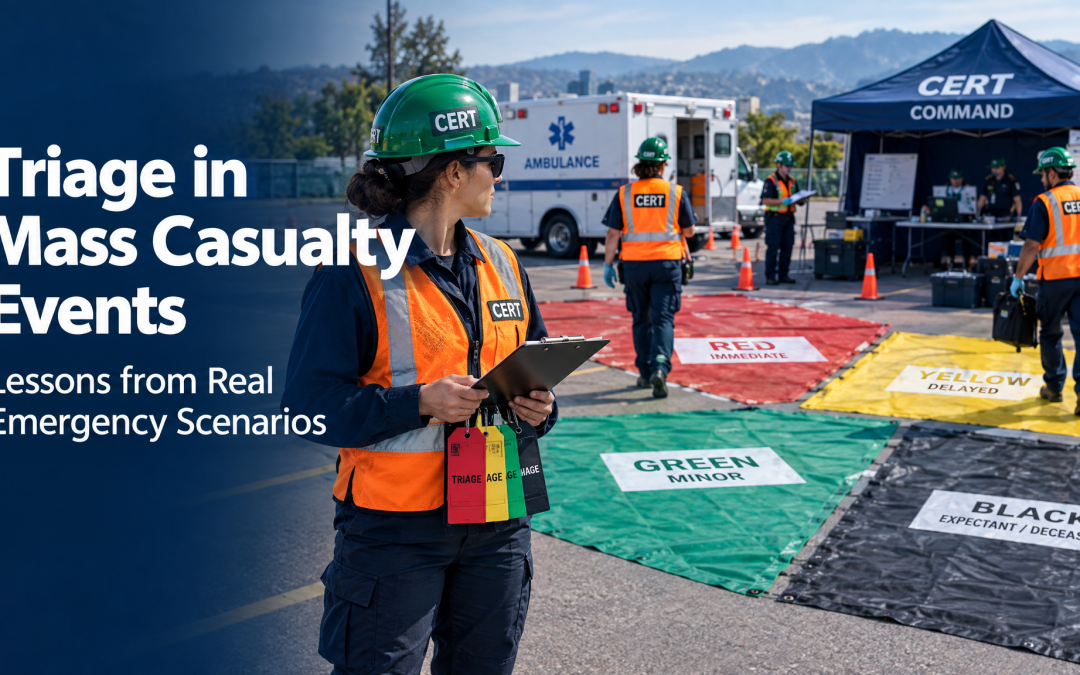
Modern triage systems typically categorize patients into four main groups using color-coded tags. Red tags indicate immediate life-threatening injuries requiring urgent intervention. Yellow tags represent delayed treatment cases where patients have serious but not immediately life-threatening conditions. Green tags are for walking wounded with minor injuries, while black tags unfortunately designate those who are deceased or have injuries incompatible with survival given available resources.
The START (Simple Triage and Rapid Treatment) system has become the gold standard for initial triage assessment. Developed in the 1980s, START allows first responders to quickly evaluate patients using three simple criteria: ability to walk, respiratory status, and circulation. This system can assess a patient in less than 60 seconds, making it invaluable when time is critical.
Real-World Emergency Scenarios: Learning from Experience
The September 11, 2001 attacks on the World Trade Center provided sobering lessons about mass casualty triage. Hospitals in New York City prepared for thousands of casualties, but the reality was starkly different. Most people either escaped with minor injuries or didn’t survive at all. This event highlighted the importance of flexible triage protocols and the need for hospitals to quickly adapt their response based on the actual patient flow rather than initial projections.
The 2013 Boston Marathon bombing offered different insights into triage effectiveness. The proximity of medical personnel already stationed for the marathon meant that triage began almost immediately. Medical professionals made rapid decisions that saved lives, demonstrating how proper training and quick implementation of triage protocols can significantly impact outcomes. The event showed that having medical personnel familiar with triage principles at large public events can be crucial.
Natural disasters present unique triage challenges, as demonstrated during Hurricane Katrina in 2005. Memorial Medical Center in New Orleans faced impossible decisions when power failed, temperatures soared, and evacuation became critical. Healthcare workers had to triage not just based on medical conditions, but also on the likelihood of surviving evacuation. This scenario emphasized the importance of considering environmental factors and resource limitations in triage decisions.
Critical Decision-Making Under Pressure
Making triage decisions requires healthcare providers to suppress their natural desire to help everyone equally. Dr. Kenneth Mattox, a trauma surgeon with decades of experience, describes triage as “organized abandonment” – the systematic decision to not treat certain patients to save others who have better chances of survival.
Psychological preparation plays a crucial role in effective triage. Healthcare workers must understand that these decisions, while emotionally difficult, serve the greater good. Training scenarios help prepare medical professionals for the emotional weight of these choices. Regular drills and simulations build muscle memory and decision-making skills that prove invaluable during actual emergencies.
Time pressure adds another layer of complexity to triage decisions. In mass casualty events, the luxury of thorough examination doesn’t exist. Healthcare providers must make life-or-death decisions based on limited information and rapid assessment. This requires extensive training and experience to develop the clinical judgment necessary for accurate rapid triage.
Technology and Modern Triage Methods
Advances in technology have enhanced traditional triage methods without replacing the fundamental human decision-making process. Electronic triage tags now allow for real-time tracking of patients and their conditions. These systems can update automatically as patients move through the healthcare system, providing better coordination between different medical facilities.
Telemedicine has emerged as a valuable tool in mass casualty situations, particularly in remote areas or when specialist expertise isn’t immediately available on-site. Emergency physicians can consult with specialists via video link to make more informed triage decisions, especially for complex cases that fall between traditional categories.
Artificial intelligence and machine learning are beginning to play supportive roles in triage decision-making. While these technologies cannot replace human judgment, they can help identify patterns and provide decision support, particularly in analyzing vital signs and predicting patient outcomes based on historical data.
Training and Preparedness for Healthcare Professionals
Effective triage requires more than understanding the color-coding system. Healthcare professionals need comprehensive training that includes both medical knowledge and psychological preparation. Medical schools and nursing programs now incorporate mass casualty training into their curricula, recognizing that these skills may be needed regardless of specialty.
Simulation exercises provide safe environments for healthcare workers to practice triage decisions without real-world consequences. These training scenarios can recreate the chaos and pressure of actual mass casualty events, helping professionals develop the mental resilience needed for effective decision-making under stress.
Interdisciplinary training has proven essential, as mass casualty events require coordination between physicians, nurses, paramedics, firefighters, and law enforcement. Understanding each team member’s role and capabilities improves overall response effectiveness and helps ensure that triage decisions are implemented efficiently.
Ethical Considerations in Emergency Triage
Triage decisions raise complex ethical questions that healthcare providers must navigate while under extreme pressure. The principle of utility – doing the greatest good for the greatest number – sometimes conflicts with the traditional medical ethic of doing everything possible for each individual patient.
Age, social status, and other personal factors should not influence triage decisions, yet unconscious bias can affect judgment even among well-trained professionals. Ongoing education and awareness training help healthcare workers recognize and minimize these biases in their decision-making processes.
Resource allocation presents another ethical challenge. When ventilators, blood products, or surgical suites are limited, healthcare teams must decide how to distribute these resources fairly while maximizing lives saved. These decisions often must be made quickly, without the benefit of ethics committee consultation that might be available in normal circumstances.
Lessons Learned and Future Improvements
Real-world mass casualty events have consistently shown that preparation and training are the most critical factors in successful triage implementation. Hospitals and emergency services that regularly practice mass casualty scenarios perform significantly better when actual events occur.
Communication systems often fail during large-scale emergencies, making coordination between different medical facilities difficult. Redundant communication methods and clear protocols for information sharing have become essential components of effective mass casualty response plans.
The importance of mental health support for healthcare workers involved in mass casualty events cannot be overstated. The psychological impact of making triage decisions can last long after the immediate crisis has passed. Providing appropriate support and counseling helps ensure that healthcare workers can continue to function effectively in future emergencies.
Building Resilient Emergency Response Systems
Creating effective mass casualty response capabilities requires investment in training, equipment, and coordination systems. Hospitals must maintain surge capacity and have clear protocols for rapidly expanding their capabilities when needed. This includes not just physical space and equipment, but also trained personnel who can implement triage protocols effectively.
Community-wide preparedness extends beyond healthcare facilities to include first responders, emergency management agencies, and even the general public. When community members understand basic triage principles and can provide initial assistance, the overall response becomes more effective.
Regular evaluation and improvement of triage protocols based on lessons learned from actual events helps refine these systems over time. What works in theory may need adjustment when tested in real-world conditions, and continuous improvement ensures that triage systems evolve to meet changing needs and circumstances.
The lessons learned from real emergency scenarios have shaped modern triage practices, saving countless lives through improved preparation and response. While we hope never to face such situations, the knowledge gained from past events ensures that healthcare systems are better prepared to handle future mass casualty incidents. The courage and skill of healthcare professionals who make these difficult decisions under extreme pressure continue to inspire improvements in emergency medical care, ultimately serving the goal of preserving as many lives as possible when disaster strikes.
Frequently Asked Questions
What is the main goal of triage in mass casualty events?
The primary goal of triage in mass casualty events is to save the greatest number of lives possible by efficiently allocating limited medical resources. This means prioritizing patients who have the best chance of survival with immediate treatment while ensuring that resources aren’t spent on cases where intervention is unlikely to succeed.
How quickly should triage decisions be made?
Triage decisions should be made as quickly as possible, typically within 30-60 seconds per patient during the initial assessment. The START system is designed to allow rapid evaluation using simple criteria that can be assessed quickly without detailed examination or diagnostic testing.
Who is qualified to perform triage in emergency situations?
Triage can be performed by various trained healthcare professionals including physicians, nurses, paramedics, and other emergency medical personnel. The key requirement is proper training in triage protocols and the ability to make rapid clinical assessments under pressure. In some situations, the most experienced medical professional available takes on the triage role.
Can triage decisions be changed as situations evolve?
Yes, triage is a dynamic process. As resources become available or patient conditions change, triage categories can be reassessed and modified. Patients initially tagged as “delayed” might be upgraded to “immediate” if their condition deteriorates, or if additional resources become available to treat them.
How do healthcare workers cope with the emotional stress of triage decisions?
Healthcare workers cope through comprehensive training that includes psychological preparation, regular debriefing sessions after mass casualty events, access to mental health support services, and understanding that these difficult decisions serve the greater good. Many facilities provide critical incident stress management programs to help staff process these challenging experiences.
What happens to patients who receive black tags during triage?
Patients who receive black tags are either deceased or have injuries that are incompatible with survival given the available resources and circumstances. While this is emotionally difficult, these decisions allow medical resources to be directed toward patients who can be saved. In some cases, if resources later become available, black tag patients may be reassessed.